
After Caliban
Caribbean Art in a Global Imaginary
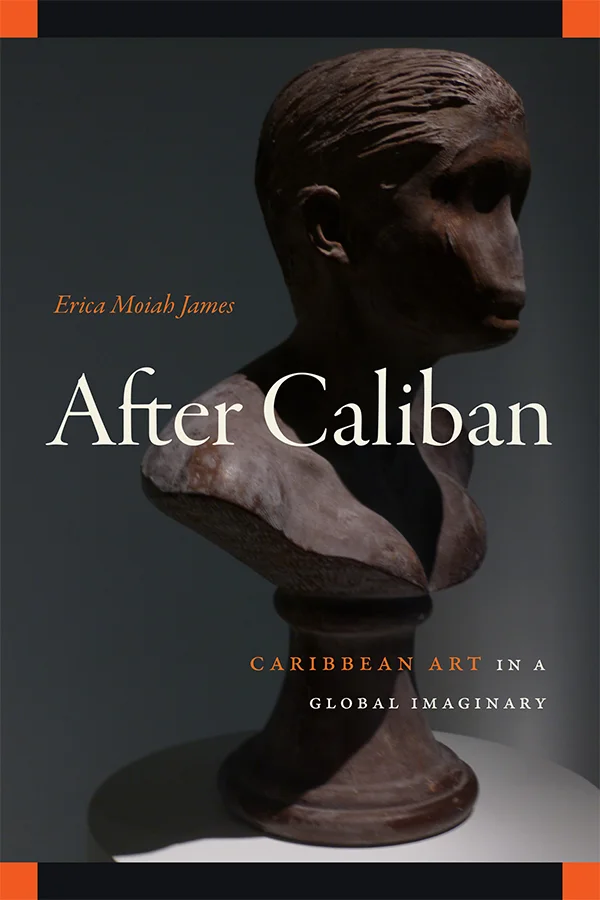
Book
Pages: 304
Illustrations: 69 color illustrations
Published: September 2025
Author: Erica Moiah James
Subjects
Art and Visual Culture > Art History, African American Studies and Black Diaspora, Caribbean Studies
Art and Visual Culture > Art History, African American Studies and Black Diaspora, Caribbean Studies
Praise
Buy
Availability: In stock
Price: $34.00
This title will be released on September 09, 2025
Buy the e-book:
Information
Author/Editor Bios
Back to Top
Erica Moiah James is Associate Professor in the Department of Art and Art History at the University of Miami and Non-Resident Senior Research Fellow at the Visual Identities in Art and Design Research Centre, University of Johannesburg.
Table Of Contents
Back to Top
Acknowledgments vii
Introduction. “Wat Wrong wit Dis Place?” 1
1. From Behind God’s Back: Janine Antoni’s Embodied Histories 37
2. Meeting in the Upper Room: Belkis Ayón’s La Cena, 1988–1993 77
3. Historical Drag: Genre, Violence, and History in Edouard Duval-Carrié’s Mardigras at Fort Dimanche, 1992 121
4. The Caribbean Does Not Exist: Maurizio Cattelan’s 6th Caribbean Biennial, 1999 163
5. “Wrong Way” Lenny, Tempests, and Other Dètournements 205
Notes 223
Bibliography 259
Index 281
Introduction. “Wat Wrong wit Dis Place?” 1
1. From Behind God’s Back: Janine Antoni’s Embodied Histories 37
2. Meeting in the Upper Room: Belkis Ayón’s La Cena, 1988–1993 77
3. Historical Drag: Genre, Violence, and History in Edouard Duval-Carrié’s Mardigras at Fort Dimanche, 1992 121
4. The Caribbean Does Not Exist: Maurizio Cattelan’s 6th Caribbean Biennial, 1999 163
5. “Wrong Way” Lenny, Tempests, and Other Dètournements 205
Notes 223
Bibliography 259
Index 281
Rights
Back to TopSales/Territorial Rights: World
Rights and licensingAwards
Back to TopSecond Place, 2026 Caribbean Studies Association Gordon K and Sybil Lewis Book Award
Additional Information
Back to Top
Paper ISBN:
978-1-4780-3213-7 /
Hardcover ISBN:
978-1-4780-2887-1 /
eISBN:
978-1-4780-6106-9 /
DOI:
https://doi.org/10.1215/9781478061069
Publicity material