
Featured Journal Issues
Learn more about recent special issues from across our journals program.
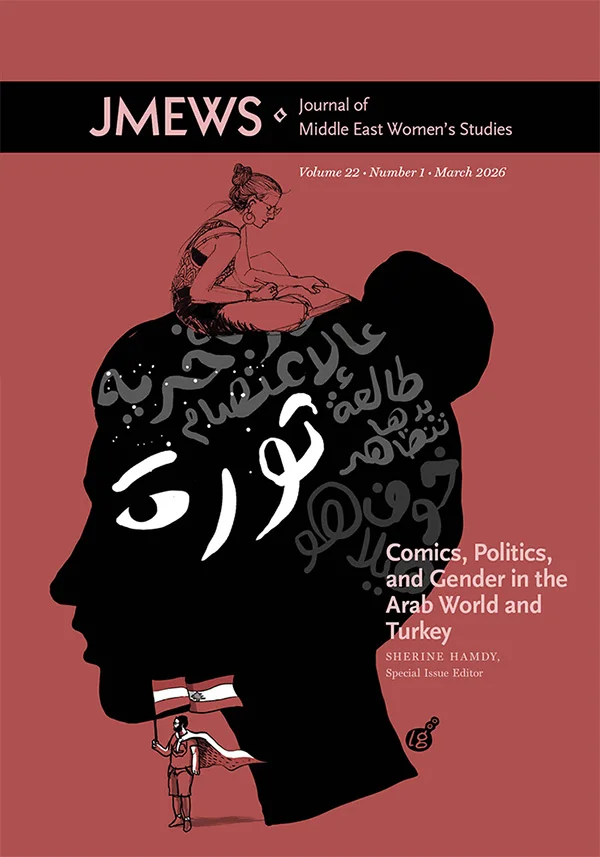
Comics, Politics, and Gender in the Arab World and Turkey
an issue of QJournal of Middle East and Women's Studies
Sherine Farouk Hamdy, issue editor
This special issue on “Comics, Politics, and Gender in the Arab World and Turkey” brings together works that analyze how comics, or graphic narratives, have become an important medium for documenting firsthand accounts of political turmoil, violence, and resilience in the region. Highlighting the work of Arab women comics artists who are less well known in the West, the issue explores the important role comics can play in documenting people’s range of experiences during moments of intense political strife and violence. The articles in this issue also serve as testaments to the challenges that creators have overcome in producing graphic narratives that transgress the boundaries between text and image, between internal thought and outward expression, between political forces and personal experience, and between “high” and “low” forms of expression. The authors of this special issue argue that comics are an excellent medium for documenting the horrors of warfare, as well as memory, survival, fear, and grief. They also demonstrate how comics creators navigate multiple forms of censorship and overcome hurdles to disseminating their work.
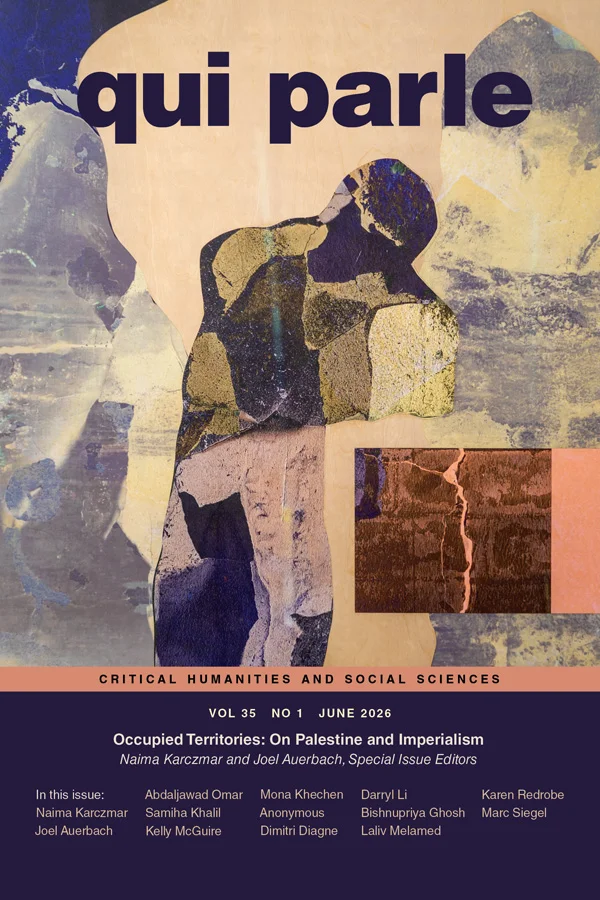
Occupied Territories: On Palestine and Imperialism
an issue of Qui Parle
Naima Karczmar and Joel Auerbach, issue editors
In the wake of genocide, this special issue gathers critical theorizations of the Israeli occupation of Palestine with the aim of providing a basis for understanding formations of imperialism and possibilities of solidarity in the contemporary global conjuncture.
Metaphors of Compilation
an issue of English Language Notes
Arthur Bahr, Zachary Hines, and Thomas Sawyer, issue editors
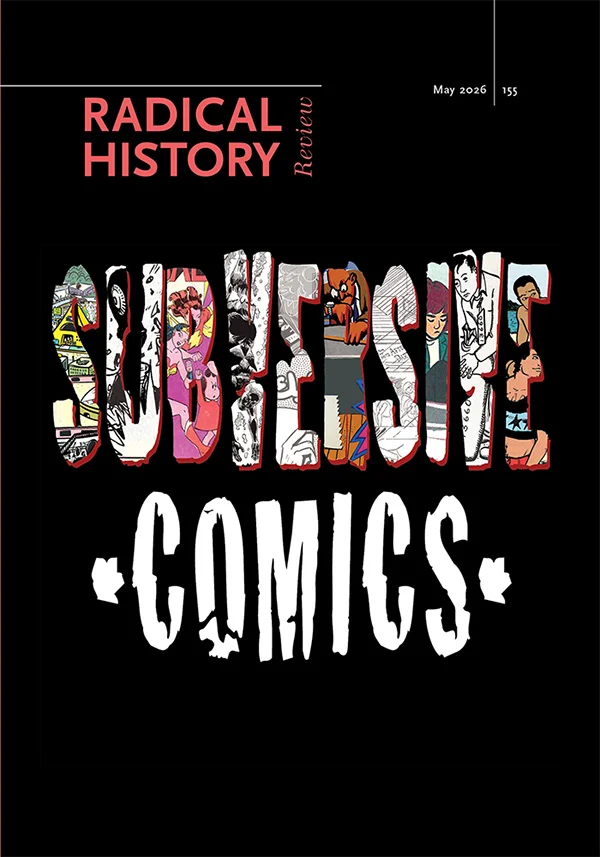
Subversive Comics
an issue of Radical History Review
Paul Buhle, Andor Skotnes, Raymond Tyler, Josh Brown, and Kenton Worcester, issue editors
This special issue explores the global history, politics, and cultural impact of radical comics, tracing their evolution from underground comix and early political satire to contemporary graphic narratives and comics journalism. It highlights how artists and scholars have used the medium to challenge power, document social struggles, and expand the boundaries of both art and historical storytelling.
Second Worldism: Geography, Comparison, Form
an issue of Comparative Literature
Alice Lovejoy and Djordje Popovic, issue editors
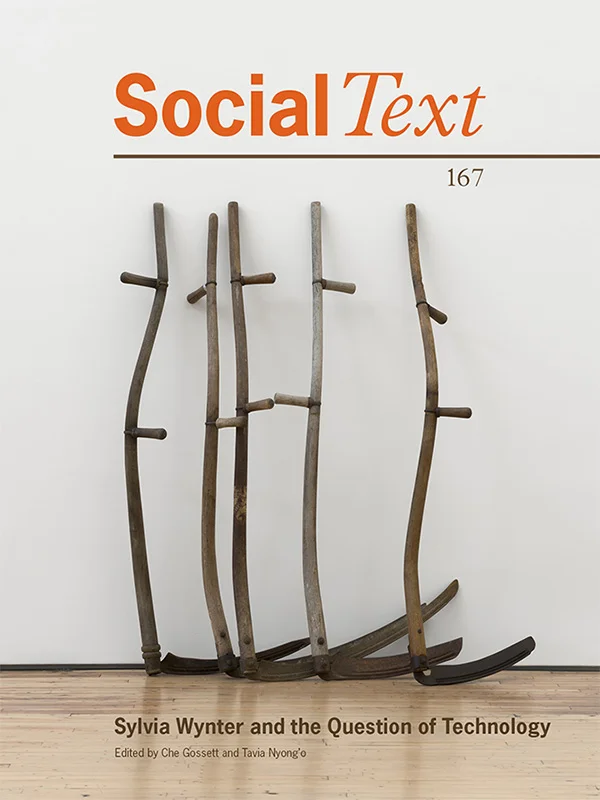
Sylvia Wynter and the Question of Technology
an issue of Social Text
Che Gossett and Tavia Nyong’o, issue editors
This special issue of Social Text emerges from the expanding con- versation across disciplines—philosophy, Black Marxism, critical race theory, aesthetics, feminist critique, and neurophilosophy—that engages Wynter as a source of methodological invention rather than static exegesis. The contributors activate Wynter’s thought to interrogate the entanglements of race, technics, and futurity, building on her call to reconfigure the human as a praxis of planetary coexistence rather than an extractive category of destruction and rule.
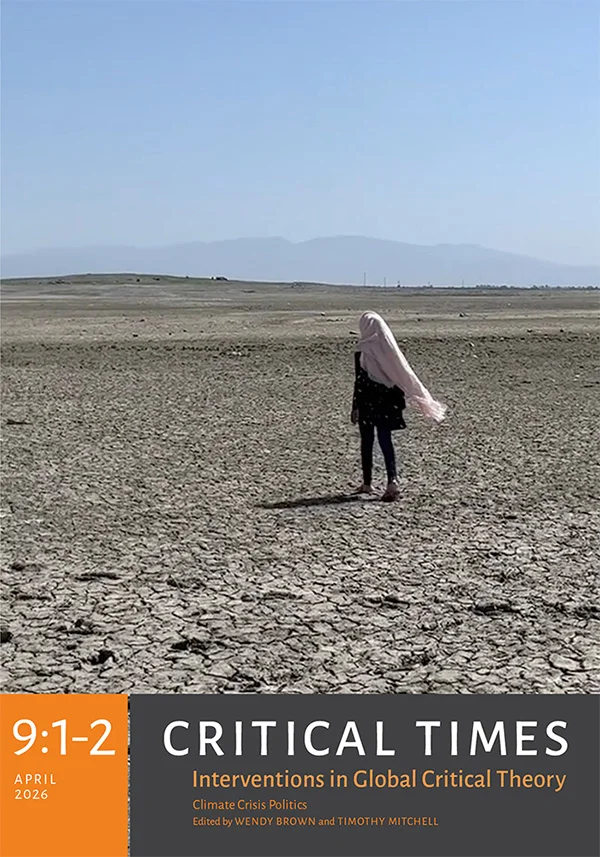
Climate Crisis Politics
an issue of Critical Times
Wendy Brown and Timothy Mitchell, issue editors
This double special issue, “Climate Crisis Politics,” is guest-edited by Wendy Brown and Timothy Mitchell. It includes contributions by Brown, Mitchell, Andreas Folkers, Alyssa Battistoni, Julia Dehm, Nayanika Mathur, Heather Davis, and David Bond; a mixed-media, experimental collaboration between Hillary Angelo and Lynne Huffer; and an artistic intervention by Sa’dia Rehman, with a curatorial statement by Al-An deSouza.
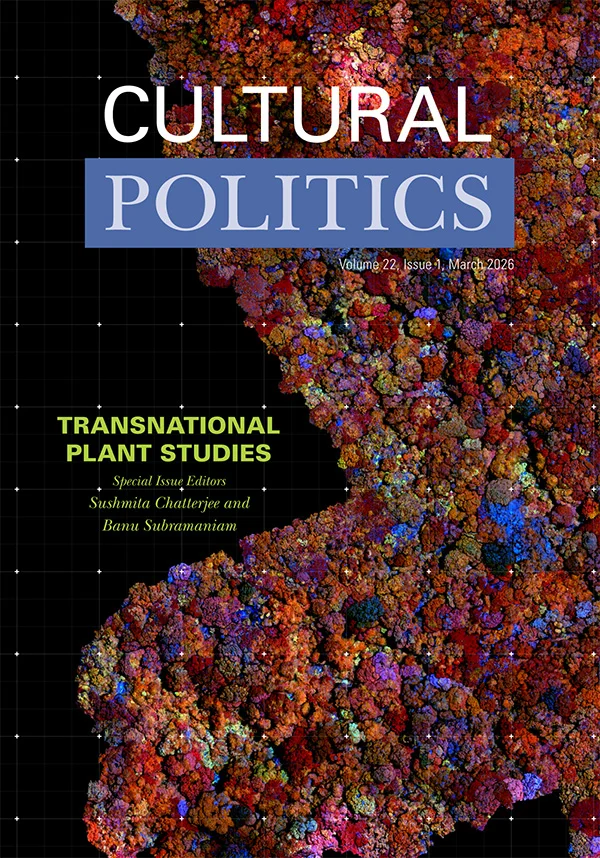
Transnational Plant Studies
an issue of Cultural Politics
Sushmita Chatterjee and Banu Subramaniam, issue editors
Contributors: Aniket Aga, Fabio Andrés Ávila, Kathleen M. Burns, Juan Pablo Caicedo Torres, Sushmita Chatterjee, Laura Cinti, Sophia Doyle, Susanna Ferguson, Adolfo Jara-Muñoz, Mukesh Kulriya, Miryam Nacimento, Li Qi Peh, Eva Steinberg, Banu Subramaniam
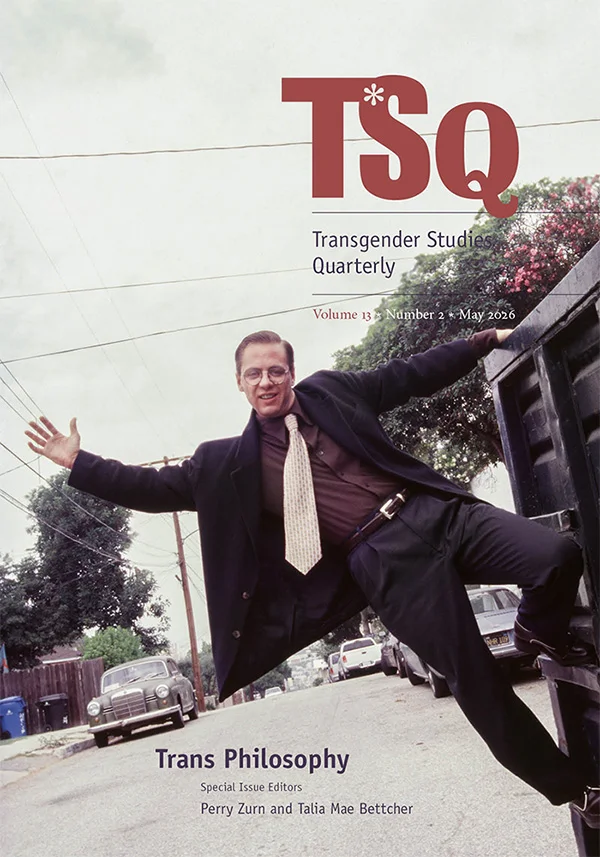
Trans Philosophy
an issue of TSQ
Perry Zurn and Talia Mae Bettcher, issue editors
What do philosophy and trans studies contribute to one another? Trans philosophy is a form of theory accountable to trans lives, histories, and communities. This special issue highlights the substantive and methodological contributions of that nascent field.
Contributors: Rowan Bell, Talia Mae Bettcher, Alex Brostoff, Dan Bustillo, Ciara Cremin, Matthew J. Cull, rl Goldberg, C. Jacob Hale, Ido Katri, Tamsin Kimoto, Resa-Philip Lunau, Blas Radi, Samu/elle Striewski, Sofie Vlaad, Jules Wong, Perry Zurn
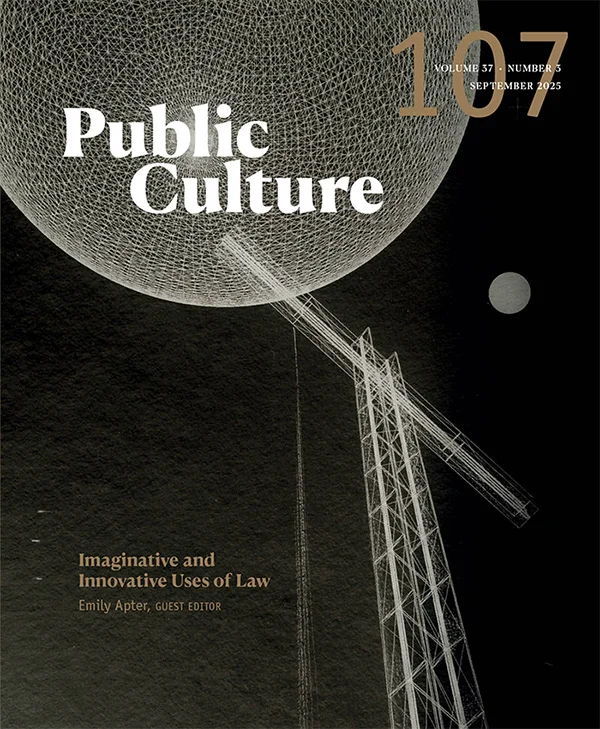
Imaginative and Innovative Uses of Law
an issue of Public Culture
Emily Apter, issue editor
Contributors: Arjun Appadurai, Emily Apter, David Birkin, Max Houghton, Lisa Siraganian, Julie Stone Peters, Patricia J. Williams, and Hentyle Yapp
Through Hartog′s Lens: Regimes of Historicity in French History Books (ca. 1240–ca. 1560)
an issue of Romanic Review
Johannes Junge Ruhland and Antoine Brix, issue editors
Contributors: Antoine Brix, Pierre Courroux, Ellen Delvallée, Jeanette Patterson, Clara de Raigniac, Daniel Reeve, and Johannes Junge Ruhland
For Whom Do We Read?
an issue of differences
Peter Szendy, issue editor
There have been many theories of reading, with their more or less normative claims, that consider the reader on the one hand and the text on the other. What seems to be forgotten, especially since reading has become primarily a silent and solitary activity, is the addressee of reading. This special issue invites literary theorists and historians to engage with a question raised by this reader: For whom do we read?
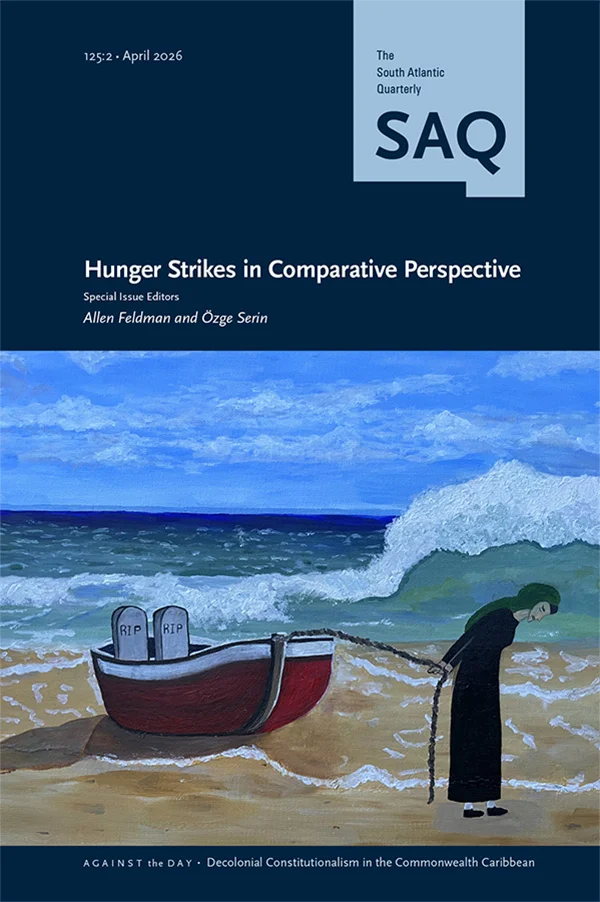
Hunger Strikes in Comparative Perspective
an issue of South Atlantic Quarterly
Allen Feldman and Özge Serin, issue editors
The first special issue to read comparatively across hunger strikes that mobilize diverse and potentially discordant onto-epistemologies, political genealogies, organizational forms, performative repertoires, and affective intensities. The special issue examines both displacements and connections among resistances to captivity in prisons, colonies, and border regimes — spanning Palestinians in Israeli colonial prisons, indigenous Mapuche in Chile, Tamil insurgents in Sri Lanka, refugees in Greek camps, and Kurdish and communist prisoners in Turkey's F-type high security prisons. Together, the contributions offer a perspective at once site-specific and expansive, critical and generative — one that produces proximity between struggles chronologically and spatially distant, and redefines what constitutes a politics of the body today.
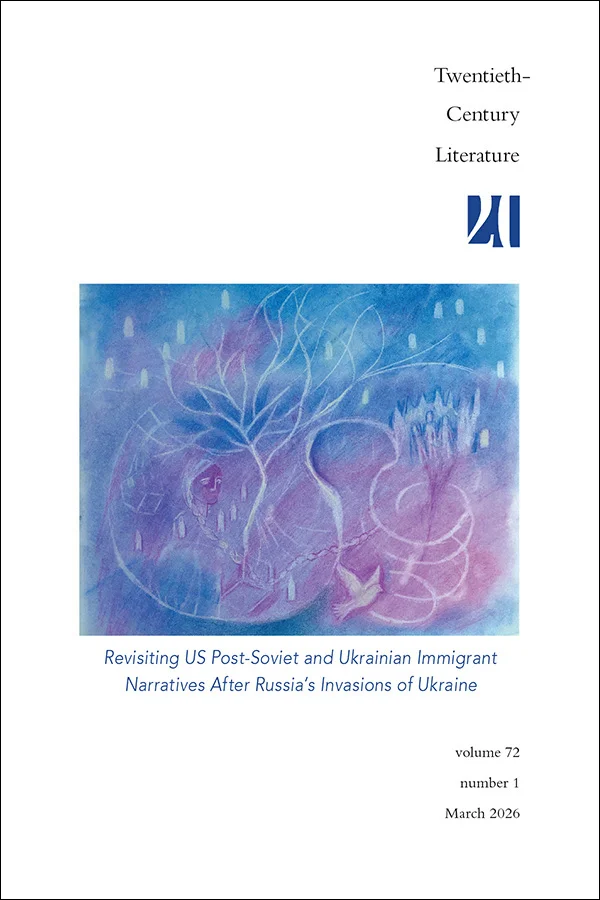
Revisiting US Post-Soviet and Ukrainian Immigrant Narratives After Russia’s Invasions of Ukraine
an issue of Twentieth-Century Literature
Claudia Sadowski-Smith and Katharina Wiedlack, issue editors
Contributors: Anastassiya Andrianova, Claudia Sadowski-Smith, Daria Semenova, Saltanat Shoshanova, and Katharina Wiedlack
Modernizing Federal Drug Sentencing
an issue of Federal Sentencing Reporter
Alison Siegler, issue editor
This special two-part issue of the Federal Sentencing Reporter captures the momentum sparked by the U.S. Sentencing Commission’s 2024 national roundtable on federal drug sentencing reform. Building on that dialogue, part one brings together leading judges, scholars, and practitioners to critically assess whether and how the federal drug guidelines should be modernized. Contributors explore pressing questions such as the continued reliance on drug quantity, alternative measures of culpability, fentanyl sentencing in the context of the opioid epidemic, and reforms to mandatory minimums and safety valve eligibility. Timely, substantive, and policy-shaping, this collection is essential reading for anyone invested in the future of federal sentencing reform.
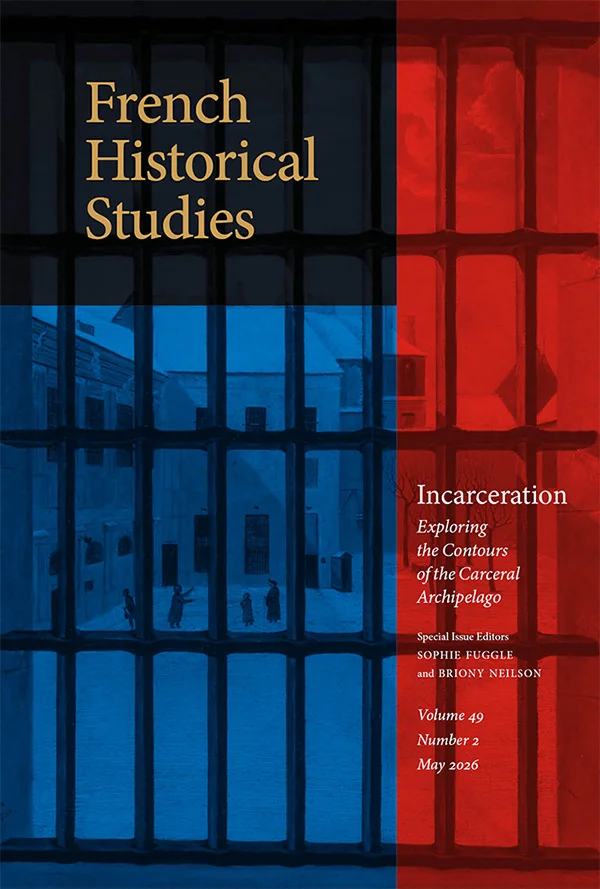
Incarceration: Exploring the Contours of the Carceral Archipelago
an issue of French Historical Studies
Sophie Fuggle and Briony Nelson, issue editors
This special issue uncovers histories of incarceration in France and the French empire from the early modern period through the late twentieth century. Its articles examine both coerced and non‑coerced forms of confinement, including prisons, penal colonies, and monastic institutions. The issue illuminates the shifting priorities of governing authorities as well as the concrete practices of enclosure. It also invites reflection on the legacies of these policies and experiences, especially in light of the contemporary context of high imprisonment rates in France and its overseas territories.
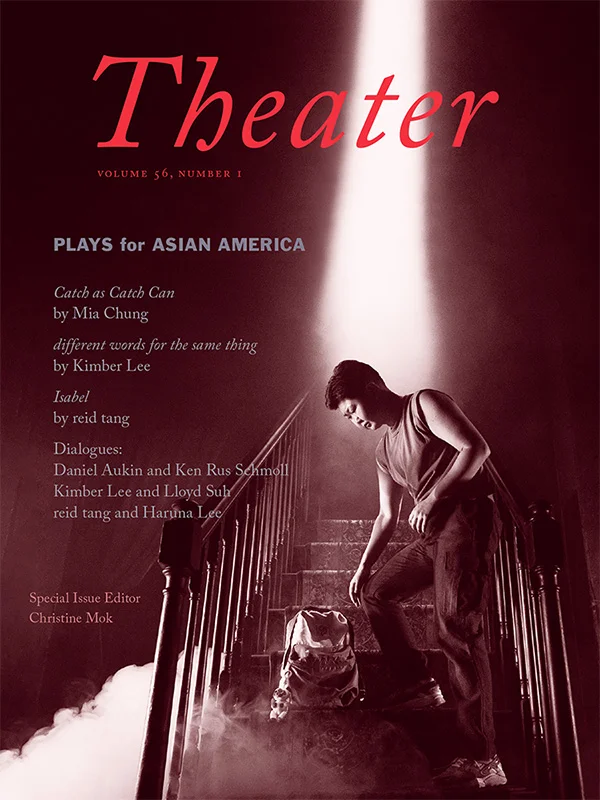
Plays for Asian America
an issue of Theater
Christine Mok, issue editor
"Plays for Asian America" is a special issue of contemporary playwriting that spotlights three recent works by Asian American playwrights. Mia Chung’s Catch as Catch Can, Kimber Lee’s different words for the same thing, and reid tang’s Isabel unsettle and reforge how Asian America is imagined today. The issue includes a contextualizing introduction and interviews with the playwrights and artists who premiered the works.