
Aníbal Quijano
Foundational Essays on the Coloniality of Power
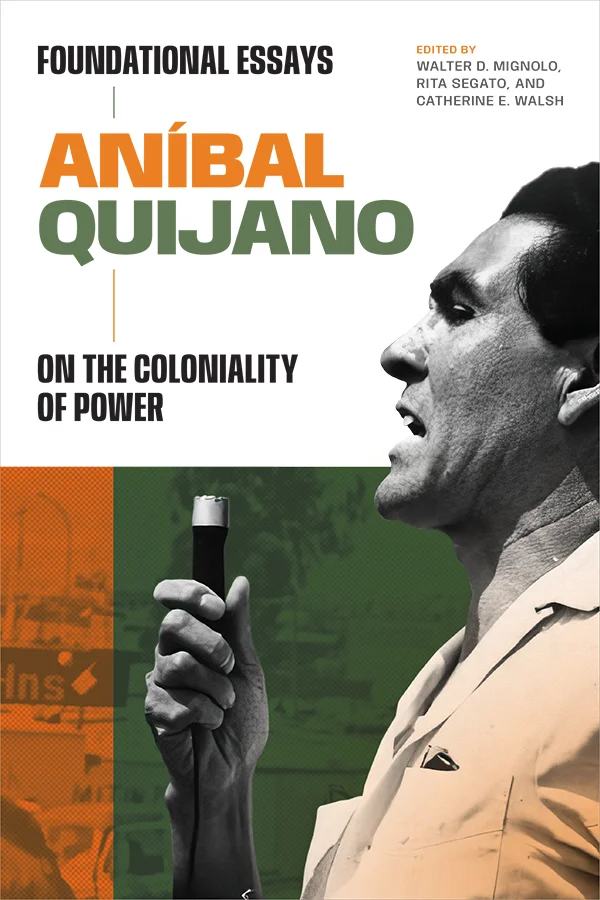
Book
Pages: 496
Published: April 2024
Author: Aníbal Quijano
Editors: Walter D. Mignolo, Rita Segato, and Catherine E. Walsh
Translator: David Frye
Praise
Buy
Availability: In stock
Price: $32.95
This title will be released on April 05, 2024
Buy the e-book:
Information
Author/Editor Bios
Back to Top
Aníbal Quijano (1928–2018) was a renowned Peruvian sociologist and theorist and the author of numerous books.
Walter D. Mignolo is William H. Wannamaker Distinguished Emeritus Professor of Romance Studies and Professor of Literature at Duke University.
Rita Segato is Professor Emerita in Bioethics and Human Rights at the University of Brasilia.
Catherine E. Walsh is Professor Emerita at the Universidad Andina Simón Bolívar.
Walter D. Mignolo is William H. Wannamaker Distinguished Emeritus Professor of Romance Studies and Professor of Literature at Duke University.
Rita Segato is Professor Emerita in Bioethics and Human Rights at the University of Brasilia.
Catherine E. Walsh is Professor Emerita at the Universidad Andina Simón Bolívar.
Table Of Contents
Back to Top
Introduction / Catherine E. Walsh, Walter D. Mignolo, and Rita Segato 1
1. Paradoxes of Modernity in Latin America 32
2. The Aesthetic of Utopia 64
3. Coloniality and Modernity/Rationality 73
4. Questioning “Race” 85
5. Coloniality of Power and Social Classification 95
6. The Return of the Future and Questions about Knowledge 132
7. Coloniality of Power, Globalization, and Democracy 146
8. The New Anticapitalist Imaginary 188
9. Don Quixote and the Windmills in Latin America 204
10. The “Indigenous Movement” and Unresolved Questions in Latin America 229
11. Coloniality of Power, Eurocentrism, and Latin America 256
12. Coloniality of Power and De/Coloniality of Power 303
13. Thirty Years Later: Another Reunion: Notes for Another Debate 317
14. The Crisis of the Colonial/Modern/Eurocentred Horizon of Meaning 331
15. Latin America: Toward a New Historical Meaning 347
16. Coloniality of Power and Subjectivity in Latin America 361
17. “Bien Vivir”: Between “Development” and the De/Coloniality of Power 379
18. Labor 392
19. Notes on the Decoloniality of Power 411
20. Modernity, Capital, and Latin America Were Born the Same Day: Interview by Nora Velarde 418
Bibliography 443
Index 457
1. Paradoxes of Modernity in Latin America 32
2. The Aesthetic of Utopia 64
3. Coloniality and Modernity/Rationality 73
4. Questioning “Race” 85
5. Coloniality of Power and Social Classification 95
6. The Return of the Future and Questions about Knowledge 132
7. Coloniality of Power, Globalization, and Democracy 146
8. The New Anticapitalist Imaginary 188
9. Don Quixote and the Windmills in Latin America 204
10. The “Indigenous Movement” and Unresolved Questions in Latin America 229
11. Coloniality of Power, Eurocentrism, and Latin America 256
12. Coloniality of Power and De/Coloniality of Power 303
13. Thirty Years Later: Another Reunion: Notes for Another Debate 317
14. The Crisis of the Colonial/Modern/Eurocentred Horizon of Meaning 331
15. Latin America: Toward a New Historical Meaning 347
16. Coloniality of Power and Subjectivity in Latin America 361
17. “Bien Vivir”: Between “Development” and the De/Coloniality of Power 379
18. Labor 392
19. Notes on the Decoloniality of Power 411
20. Modernity, Capital, and Latin America Were Born the Same Day: Interview by Nora Velarde 418
Bibliography 443
Index 457
Rights
Back to TopSales/Territorial Rights: World
Rights and licensingAdditional Information
Back to Top
Paper ISBN:
978-1-4780-3032-4 /
Hardcover ISBN:
978-1-4780-2609-9 /
eISBN:
978-1-4780-5935-6 /
DOI:
https://doi.org/10.1215/9781478059356
Publicity material