
Crip Screens
Countering Psychiatric Media Technologies
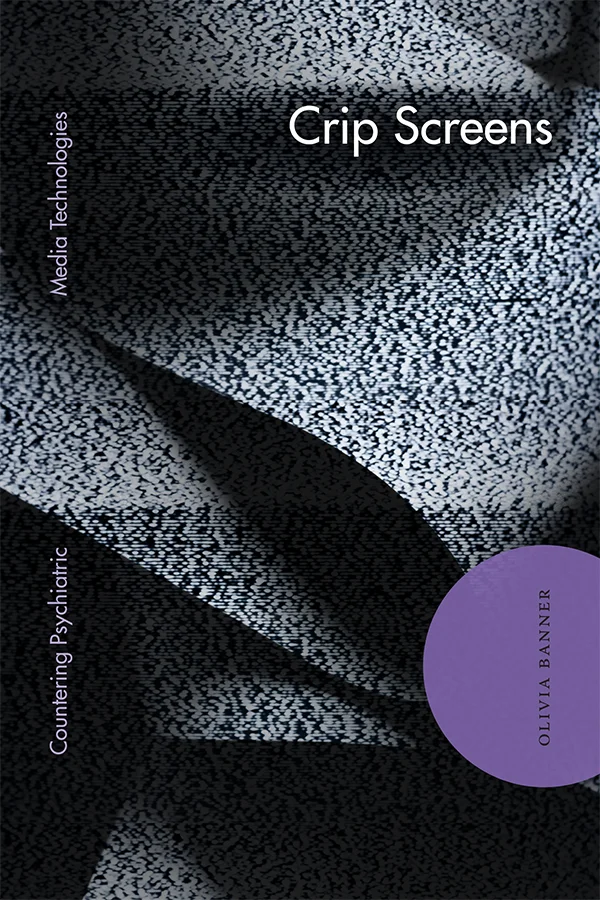
Book
Pages: 160
Illustrations: 14 illustrations
Published: October 2025
Author: Olivia Banner
Praise
Buy
Availability: Loading...
Price: Loading...
This title will be released on October 21, 2025
Buy the e-book:
Information
Author/Editor Bios
Back to Top
Olivia Banner is Director of Strategy and Operations at the Center for Research and Education on Accessible Technology and Experiences at the University of Washington and author of Communicative Biocapitalism: The Voice of the Patient in Digital Health and the Health Humanities.
Table Of Contents
Back to Top
Introduction. The Spillover and Psychiatric Ways of Screening 1
1. Psychiatric Ways of Screening in the Long 1960s 19
2. Feminist-of-Color Activism and Information Justice at Lincoln Hospital 49
3. From Spillover to Streets: Community-Organized Filmmaking as Mutual Aid 73
4. Countering Psychiatric Ways of Simulating/Racializing Patients 95
Coda 121
Acknowledgments 123
Notes 125
Bibliography 137
Index 149
1. Psychiatric Ways of Screening in the Long 1960s 19
2. Feminist-of-Color Activism and Information Justice at Lincoln Hospital 49
3. From Spillover to Streets: Community-Organized Filmmaking as Mutual Aid 73
4. Countering Psychiatric Ways of Simulating/Racializing Patients 95
Coda 121
Acknowledgments 123
Notes 125
Bibliography 137
Index 149
Rights
Back to TopSales/Territorial Rights: World
Rights and licensingAdditional Information
Back to Top
Paper ISBN:
978-1-4780-3256-4 /
Hardcover ISBN:
978-1-4780-2920-5 /
eISBN:
978-1-4780-6139-7 /
DOI:
https://doi.org/10.1215/9781478061397
Publicity material