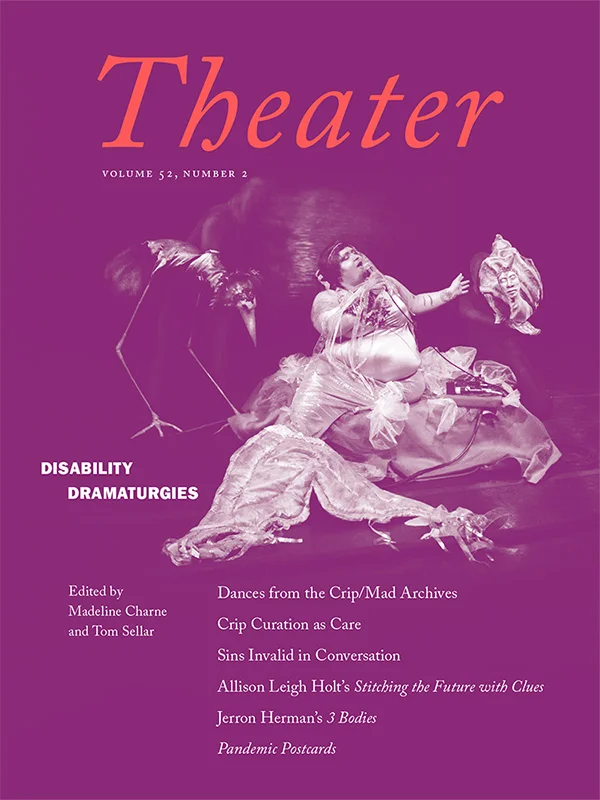
Disabled artists have often been excluded, ignored, marginalized, or outright exploited in theater, particularly in America. In this special issue, disabled practitioners and scholars explore how strategies of care—long cultivated and practiced by disabled artists and the creative communities around them—might speak to the present moment. "This decade has fast evolved into an era for rethinking core principles of theater in the interest of equity and inclusion, while fundamentals of liveness and presence fall to new circumstance," write the editors in their introduction. "Displaced bodies, as well as bodies newly embodied, reembodied, and radically connected through technologies, have moved to the fore of theatrical imagination, while also becoming more commonplace to spectators. And disabled artists—whose inventiveness, resilience, and grace might serve as a model for the entire field of performance—may be finding new points of entry into a broader American culture now transformed by medical contingency."
Contributors: Indira Allegra, Patty Berne, Madeline Charne, Jessica A. Cooley, Ann M. Fox, Jerron Herman, Allison Leigh Holt, Petra Kuppers, Nomy Lamm, Tom Sellar, Jessica A. Watkin