
Fueling Development
How Black Radical Trade Unionism Transformed Trinidad and Tobago
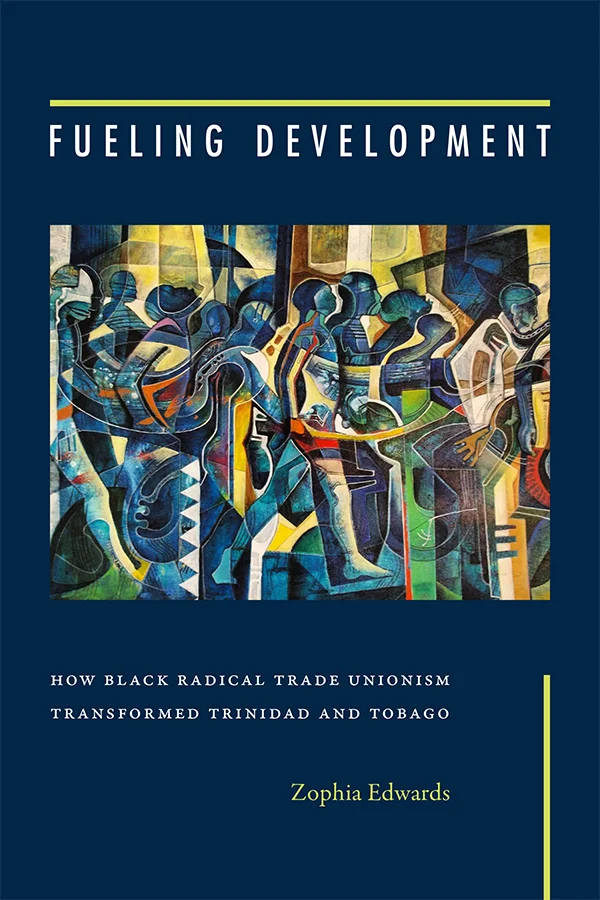
Book
Pages: 336
Illustrations: 7 illustrations
Published: September 2025
Author: Zophia Edwards
Praise
Buy
Availability: In stock
Price: $28.95
This title will be released on September 16, 2025
Buy the e-book:
Information
Author/Editor Bios
Back to Top
Zophia Edwards is Assistant Professor of Sociology at Johns Hopkins University and author of Race, Capitalism, and the COVID-19 Pandemic.
Table Of Contents
Back to Top
List of Abbreviations ix
Acknowledgments xiii
Introduction 1
1. Proletarianization, Race Making, and Capital Accumulation, 1498–1914 19
2. The 1919 Uprising and the Emergence of Liberation Unionism 45
3. The 1937 General Strike and the Deepening of Liberation Unionism 85
4. Decolonization and Fortuitous Failures 113
5. Postindependence Resurgence of Liberation Unionism 143
6. Comparing Worker Movements 181
Conclusion 199
Appendix: Methodology 213
Notes 217
Bibliography 267
Index 305
Acknowledgments xiii
Introduction 1
1. Proletarianization, Race Making, and Capital Accumulation, 1498–1914 19
2. The 1919 Uprising and the Emergence of Liberation Unionism 45
3. The 1937 General Strike and the Deepening of Liberation Unionism 85
4. Decolonization and Fortuitous Failures 113
5. Postindependence Resurgence of Liberation Unionism 143
6. Comparing Worker Movements 181
Conclusion 199
Appendix: Methodology 213
Notes 217
Bibliography 267
Index 305
Rights
Back to TopSales/Territorial Rights: World
Rights and licensingAwards
Back to TopCo-Winner of the 2026 American Sociological Association Theory Section Prize
Honorable Mention, 2026 Caribbean Studies Association Gordon K and Sybil Lewis Book Award
Winner of the 2026 American Sociological Association Distinguished Scholarly Book Award
Winner, 2026 Immanuel Wallerstein Memorial Book Award, presented by the Political Economy of the World-System Section of the American Sociological Association
Additional Information
Back to Top
Paper ISBN:
978-1-4780-3245-8 /
Hardcover ISBN:
978-1-4780-2905-2 /
eISBN:
978-1-4780-6124-3 /
DOI:
https://doi.org/10.1215/9781478061243
Publicity material