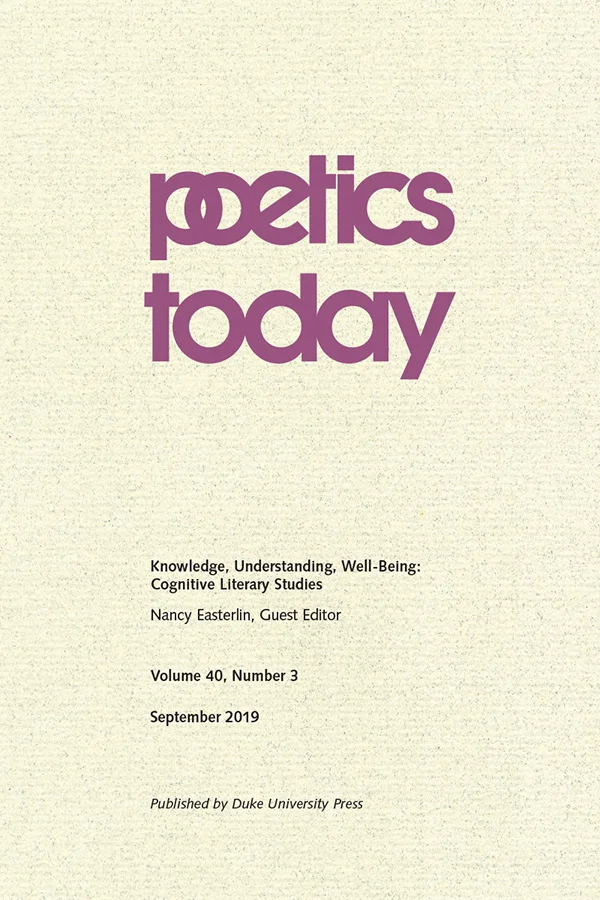
Cognitive literary studies occupies a special position in debates over the purpose of higher education and the value of the humanities. Through its varied interdisciplinary commitments, cognitive literary studies offers ways to discover the processes, forms of knowledge, and ethical function of literary experience. Contributors to this issue argue that the humanities are not a trivial pursuit by theorizing and documenting the dynamic interactions of the individuals, groups, texts, and environments that cumulatively produce the forms of knowledge specific to aesthetic engagement. Hailing from psychology, communications, and literary studies, these authors represent diverse methodologies and a range of cognitive specializations, including empirical reading studies, empathy, neurophenomenology, and mindfulness psychology. Through the application of psychology to literature and literary theory, they explore the capacity of the literary humanities to enhance thought and action, whether through scholarship, teaching, mental flexibility, or human well-being.
Contributors Marshall Alcorn, Paul B. Armstrong, Katalin Bálint, Mark Bracher, Elizabeth Bradburn, M. Soledad Caballero, Nancy Easterlin, Richard J. Gerrig, Erin James, Aimee Knupsky, Anežka Kuzmicová, Micah L. Mumper, Michael O’Neill, Margrethe Bruun Vaage, Alexa Weik von Mossner
Nancy Easterlin is Professor of Women’s and Gender Studies at the University of New Orleans and author of A Biocultural Approach to Literary Theory and Interpretation.