
Home / Books / On the Way to Theory

On the Way to Theory
Book

Pages: 496

Illustrations: 27 illustrations

Published: October 2024

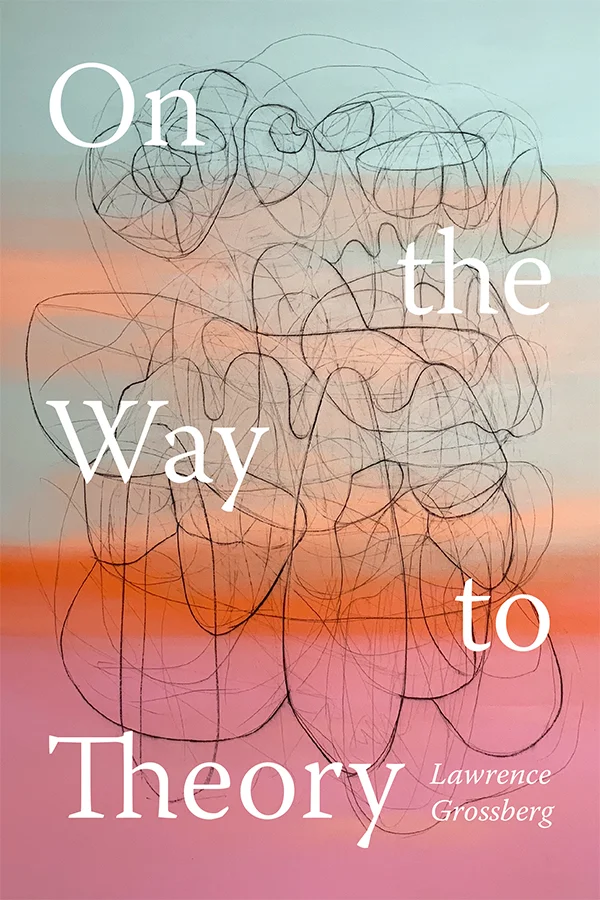
In On the Way to Theory, Lawrence Grossberg introduces the major ways of thinking that provide the backstory for contemporary Western theory. Asking readers to think about thinking, Grossberg traces cultural and critical theory’s foundations from the contested enlightenments to modern and postmodern conceptualizations of power, experience, language, and existence. He introduces key figures as historical characters and lays out the unique set of tools for thought that their “deep theories” offer. Through finely tuned and accessible descriptions of their concepts and logics, Grossberg highlights thinkers including Spinoza, Kant, Hegel, Marx, Nietzsche, Wittgenstein, Heidegger, Derrida, Foucault, Deleuze, and Hall, defining the possibilities of their thought. This book is essential for those interested in how theories shape our understanding of the world, influence our choices, and define our realities. It challenges us to recognize the multiplicity and complexities of ways of thinking in our quest for knowledge and understanding. By setting out a story of theoretical foundations, Grossberg invites readers to think toward the future of theory and expand conversations around theoretical scrutiny and criticism.

Praise

“With an extraordinarily broad vision and in wonderfully accessible language, Lawrence Grossberg provides a modern Guide for the Perplexed that lays out the background necessary for anyone facing the challenges of contemporary theory.” - Michael Hardt, author of The Subversive Seventies

“Offering a robust account of some notoriously difficult thinkers and their relationships to each other, On the Way to Theory presents a convincing case for a specific genealogy of contemporary theoretical thought as it bears upon the humanities and social sciences. This clearly written, unique, and highly distinctive resource will prove utterly indispensable to its readers.” - Jeremy Gilbert, coauthor of Hegemony Now: How Big Tech and Wall Street Won the World (and How We Win It Back)

Buy

Availability: Loading...

Price: Loading...

Request a desk or exam copy Spring 2026 Web Sale

Information

Author/Editor Bios

Back to Top
Lawrence Grossberg is Distinguished Professor Emeritus of Communication at the University of North Carolina at Chapel Hill and the author and editor of numerous books, including Cultural Studies 1983, Cultural Studies in the Future Tense, Bringing It All Back Home, and Dancing in Spite of Myself, all also published by Duke University Press.

Table Of Contents

Back to Top

Preface  xiii
In Takes a Community . . .  xvii
Introduction  1
I. On Thinking about Thinking
1. Thinking and Theorizing  17
2. Modernity, Crisis, Politics (First Interregnum)  31
II. Enlightenment Routes
3. Beginnings  43
4. Enlightenment(s)  53
5. Rationalism and Descartes  73
6. Empiricism and Hume  83
7. Spinoza  97
A Brief Coffee Break  113
III. Modern Routes.
Modern Beginnings
8. Kant's Copernican Revolution  119
9. Kant and Critique  131
10. Hegel and Dialectics  145
11. Hegel and Totality  157
12. Second Modernity (Second Interregnum)  169
Power and the Limits of Reason
13. Marx and Dialectical Materialism  175
14. Marx and Historical Materialism  193
15. Nietzsche  211
16. Psychoanalysis and Freud  227
Phenomenology
17. Phenomenology and Husserl  243
18. Heidegger  257
Linguistic Turns
19. Pragmatism  279
20. Wittgenstein  295
21. Structuralism  305
22. Structuralism and Subjectivity  323
23. The Postmodern (Third Interregnum)  337
IV. Routes into the Post
24. Heidegger Again  359
25. Poststructuralism and Derrida  372
26. Deleuze  389
V. Contextual Humilities
27. Deleuze and Guattari  403
28. Foucault and Critique  417
29. Foucault and Knowledge/Power  429
30. Stuart Hall  441
Postscript  455
Bibliography  457
Index  471
 

Rights

Back to Top

Sales/Territorial Rights: World

Rights and licensing

Additional Information

Back to Top
Related Links Paper ISBN: 978-1-4780-3085-0 / Hardcover ISBN: 978-1-4780-2663-1 / eISBN: 978-1-4780-5983-7 / DOI: https://doi.org/10.1215/9781478059837