
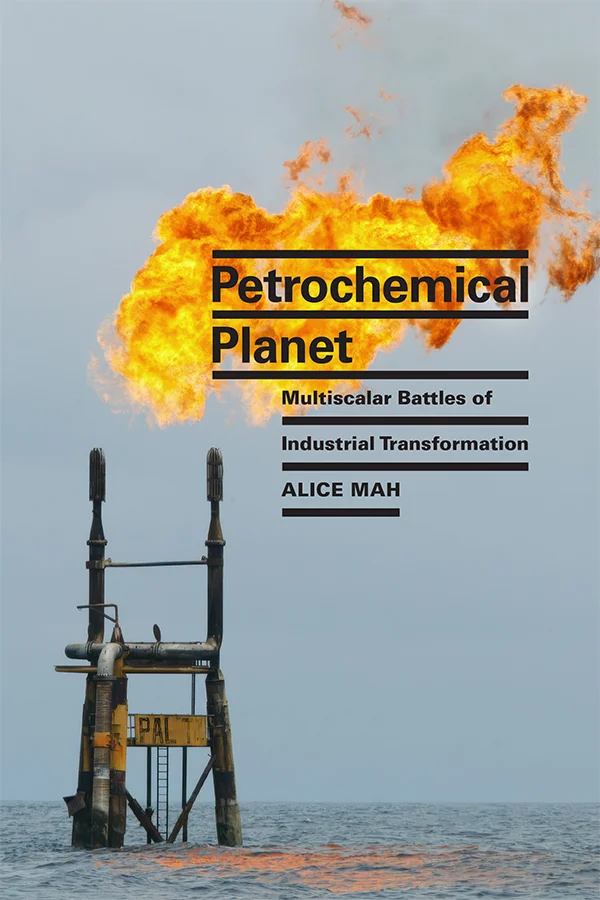
Petrochemical Planet
Multiscalar Battles of Industrial Transformation
Buy
Availability: In stock
Price: $26.95
This title will be released on September 22, 2023
Buy the e-book:
Open Access
Funding information for the OA format is found at the bottom of the page.
Information
Author/Editor Bios
Back to Top
Alice Mah is Professor of Urban and Environmental Studies at the University of Glasgow and author of Plastic Unlimited: How Corporations Are Fuelling the Ecological Crisis and What We Can Do about It.
Table Of Contents
Back to Top
Abbreviations vii
Preface ix
Acknowledgments xvii
Introduction 1
1. The Petrochemical Game of War 25
2. Enduring Toxic Injustice and Fenceline Mobilizations 53
3. Multiscalar Activism and Petrochemical Proliferation 71
4. The Competing Stakes of the Planetary Petrochemical Crisis 95
5. Petrochemical Degrowth, Decarbonization, and Just Transformations 119
6. Toward an Alternative Planetary Petrochemical Politics 141
Notes 153
Bibliography 185
Index 207
Preface ix
Acknowledgments xvii
Introduction 1
1. The Petrochemical Game of War 25
2. Enduring Toxic Injustice and Fenceline Mobilizations 53
3. Multiscalar Activism and Petrochemical Proliferation 71
4. The Competing Stakes of the Planetary Petrochemical Crisis 95
5. Petrochemical Degrowth, Decarbonization, and Just Transformations 119
6. Toward an Alternative Planetary Petrochemical Politics 141
Notes 153
Bibliography 185
Index 207
Rights
Back to TopSales/Territorial Rights: World
Rights and licensingAdditional Information
Back to Top
Related Links
- Listen to Alice Mah and Cara Daggett on the Pretty Heady Stuff podcast
- Listen to an interview with Alice Mah on the New Books Network
Publicity material
Funding Information
Back to Top
This title is freely available in an open access edition made possible by a generous contribution from the Leverhulme Trust. This project has received funding from the European Research Council (ERC) under the European Union’s Horizon 2020 research and innovation program (Grant Agreement No. 639583), with additional funding from the Philip Leverhulme Prize.