
Rwanda′s Genocide Heritage
Between Justice and Sovereignty
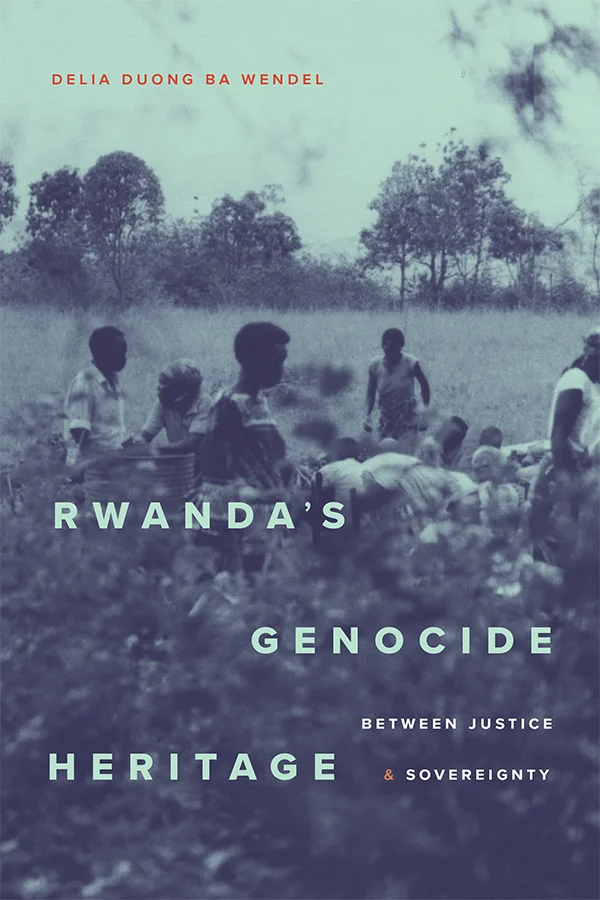
Book
Pages: 456
Illustrations: 192 illustrations
Published: November 2025
Author: Delia Duong Ba Wendel
Praise
Buy
Availability: In stock
Price: $36.95
This title will be released on November 04, 2025
Buy the e-book:
Open Access
Read the OA Edition here
Information
Author/Editor Bios
Back to Top
Delia Duong Ba Wendel is Associate Professor of Urban Studies and International Development at Massachusetts Institute of Technology and coeditor of Spatializing Politics: Essays on Power and Place.
Table Of Contents
Back to Top
Abbreviations ix
Prologue: A Rock Among Many xv
Introduction: Trauma Heritage as Repair 3
1. El Olor y El Dolor (The Smell and the Pain): The Practice of Reparative History 39
2. Beyond State Control: Global Dialogues and Local Experiences 87
3. Witnessing Nyarubuye: The Uneven Afterlives of Genocide Heritage 129
4. Memory Work: Murambi’s Conservation 163
5. Exhumation, Display, Reburial: Ordering the Future of the Past 213
6. Memory and Empowerment: Inzibutso Zigaragara, Inzibusto Zitagaragara 259
Conclusion: Memory Justice in an Era of Trauma Heritage 305
Acknowledgments 333
Appendix 1: Concise Atlas of Trauma Heritage Sites, 1875–2020 337
Appendix 2: Chronological Atlas of Trauma Heritage, 1875–2020 343
Appendix 3: Chronological Index of Featured Trauma Heritage Sites, 1875–2020 353
Notes 363
Sources 395
Index 415
Prologue: A Rock Among Many xv
Introduction: Trauma Heritage as Repair 3
1. El Olor y El Dolor (The Smell and the Pain): The Practice of Reparative History 39
2. Beyond State Control: Global Dialogues and Local Experiences 87
3. Witnessing Nyarubuye: The Uneven Afterlives of Genocide Heritage 129
4. Memory Work: Murambi’s Conservation 163
5. Exhumation, Display, Reburial: Ordering the Future of the Past 213
6. Memory and Empowerment: Inzibutso Zigaragara, Inzibusto Zitagaragara 259
Conclusion: Memory Justice in an Era of Trauma Heritage 305
Acknowledgments 333
Appendix 1: Concise Atlas of Trauma Heritage Sites, 1875–2020 337
Appendix 2: Chronological Atlas of Trauma Heritage, 1875–2020 343
Appendix 3: Chronological Index of Featured Trauma Heritage Sites, 1875–2020 353
Notes 363
Sources 395
Index 415
Rights
Back to TopSales/Territorial Rights: World
Rights and licensingAdditional Information
Back to Top
Related Links
Paper ISBN:
978-1-4780-3247-2 /
Hardcover ISBN:
978-1-4780-2910-6 /
eISBN:
978-1-4780-6131-1 /
DOI:
https://doi.org/10.1215/9781478061311
Publicity material
Funding Information
Back to Top
The open access edition of this work was made possible by generous funding from the MIT Libraries. Thank you to MIT Libraries for providing funding to make this book open access.