
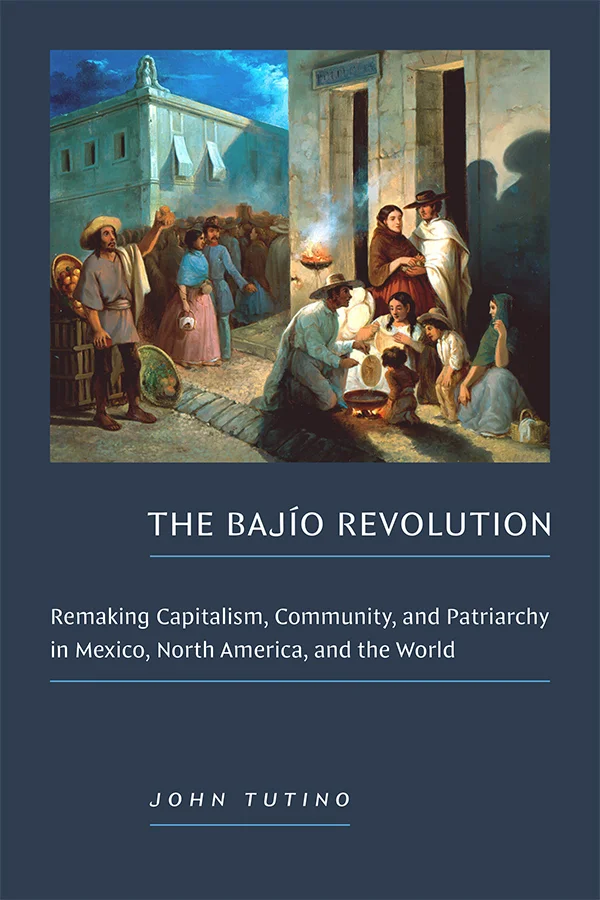
The Bajío Revolution
Remaking Capitalism, Community, and Patriarchy in Mexico, North America, and the World
Buy
Availability: In stock
Price: $33.95
This title will be released on August 22, 2025
Buy the e-book:
Information
Author/Editor Bios
Back to Top
John Tutino is Professor of History at Georgetown University, author of Making a New World: Founding Capitalism in the Bajío and Spanish North America, and editor of New Countries: Capitalism, Revolutions, and Nations in the Americas, 1750–1870, both also published by Duke University Press.
Table Of Contents
Back to Top
List of Illustrations xi
Prologue. Between Silver and Maize: New Spain and Mexico in the World, 1550–1850 xiii
Introduction. The Revolution(s) That Remade Global Capitalism 1
Part I. Making Silver Capitalism, 1500–1810
1. A New World in the Bajío: Silver, Capitalism, and Patriarchy, 1550–1760 23
2. Shaking the New World: Global Wars, Capitalist Predations, and Imperial Crises, 1760–1810 46
Part II. Breaking Silver Capitalism, 1810–1820
3. The Hidalgo Revolt: Four Months That Shook New Spain 75
4. Insurgent Guanajuato: Claiming Maize, Making Community, Breaking Silver Capitalism, Rattling Patriarchy 103
5. Counterinsurgency Capitalism in Querétaro: Production, Patriarchy, and the End of Profit at La Griega 135
6. New Spain in the Time of Revolution: Arming Power, Defending Property, Conceding Family Production 156
Part III. Seeking Mexico, 1820–1830
7. As the World Turned: Imperial Dreams, Capital Failures, National Challenges 181
8. Independent Guanajuato: Strong Communities, Strong Women, Independent Cultures 210
9. Querétaro After Insurgency: Agrarian Capitalism Falls, Families Claim Maize—and More 236
10. Mexico in the Wake of Revolution: Oligarchs Fall, Women Press On, Families Make Maize—and More 272
Part IV. Making Silver-Industrial Capitalism, 1830–1860
11. A New Bajío, 1830–1845: Silver Revives, Industry Rises, Landlords Struggle—and Family Growers Carry Everything 295
12. A New Capitalism, 1845–1860: Silver Peaks, Industry Expands, Rancheros Thrive—and Family Growers Feed Everyone 324
Conclusion. Breaking the New Bajío: US Imperialism, Liberal Assertions, French Invasion—and a Cross of Gold, 1845–1880 363
Epilogue. Mexico Since 1875: Silver Gone, Families Carry On—Until Globalizing Capital Claimed Maize 385
Acknowledgments 399
Appendix A. Querétaro Population, 1778–1860 407
Appendix B. Silver and Mining, 1810–1870 411
Appendix C. Production and Population at Querétaro Estates, 1840–1855 421
Appendix D. Production and Work at Querétaro, 1840–1855 433
Appendix E. Mexican Population, Production, Trade, Revenue, and Debt, ca. 1861 445
Appendix F. Population and Production in Guanajuato, 1855–1876 453
Appendix G. The Bajío in Mexico, 1876–1895 461
Notes 465
Bibliography 509
Index 525
Prologue. Between Silver and Maize: New Spain and Mexico in the World, 1550–1850 xiii
Introduction. The Revolution(s) That Remade Global Capitalism 1
Part I. Making Silver Capitalism, 1500–1810
1. A New World in the Bajío: Silver, Capitalism, and Patriarchy, 1550–1760 23
2. Shaking the New World: Global Wars, Capitalist Predations, and Imperial Crises, 1760–1810 46
Part II. Breaking Silver Capitalism, 1810–1820
3. The Hidalgo Revolt: Four Months That Shook New Spain 75
4. Insurgent Guanajuato: Claiming Maize, Making Community, Breaking Silver Capitalism, Rattling Patriarchy 103
5. Counterinsurgency Capitalism in Querétaro: Production, Patriarchy, and the End of Profit at La Griega 135
6. New Spain in the Time of Revolution: Arming Power, Defending Property, Conceding Family Production 156
Part III. Seeking Mexico, 1820–1830
7. As the World Turned: Imperial Dreams, Capital Failures, National Challenges 181
8. Independent Guanajuato: Strong Communities, Strong Women, Independent Cultures 210
9. Querétaro After Insurgency: Agrarian Capitalism Falls, Families Claim Maize—and More 236
10. Mexico in the Wake of Revolution: Oligarchs Fall, Women Press On, Families Make Maize—and More 272
Part IV. Making Silver-Industrial Capitalism, 1830–1860
11. A New Bajío, 1830–1845: Silver Revives, Industry Rises, Landlords Struggle—and Family Growers Carry Everything 295
12. A New Capitalism, 1845–1860: Silver Peaks, Industry Expands, Rancheros Thrive—and Family Growers Feed Everyone 324
Conclusion. Breaking the New Bajío: US Imperialism, Liberal Assertions, French Invasion—and a Cross of Gold, 1845–1880 363
Epilogue. Mexico Since 1875: Silver Gone, Families Carry On—Until Globalizing Capital Claimed Maize 385
Acknowledgments 399
Appendix A. Querétaro Population, 1778–1860 407
Appendix B. Silver and Mining, 1810–1870 411
Appendix C. Production and Population at Querétaro Estates, 1840–1855 421
Appendix D. Production and Work at Querétaro, 1840–1855 433
Appendix E. Mexican Population, Production, Trade, Revenue, and Debt, ca. 1861 445
Appendix F. Population and Production in Guanajuato, 1855–1876 453
Appendix G. The Bajío in Mexico, 1876–1895 461
Notes 465
Bibliography 509
Index 525
Rights
Back to TopSales/Territorial Rights: World
Rights and licensingAdditional Information
Back to Top
Paper ISBN:
978-1-4780-3193-2 /
Hardcover ISBN:
978-1-4780-2870-3 /
eISBN:
978-1-4780-6101-4 /
DOI:
https://doi.org/10.1215/9781478061014
Publicity material