
The Minjung Art Movement
Decolonization and Democracy in South Korea
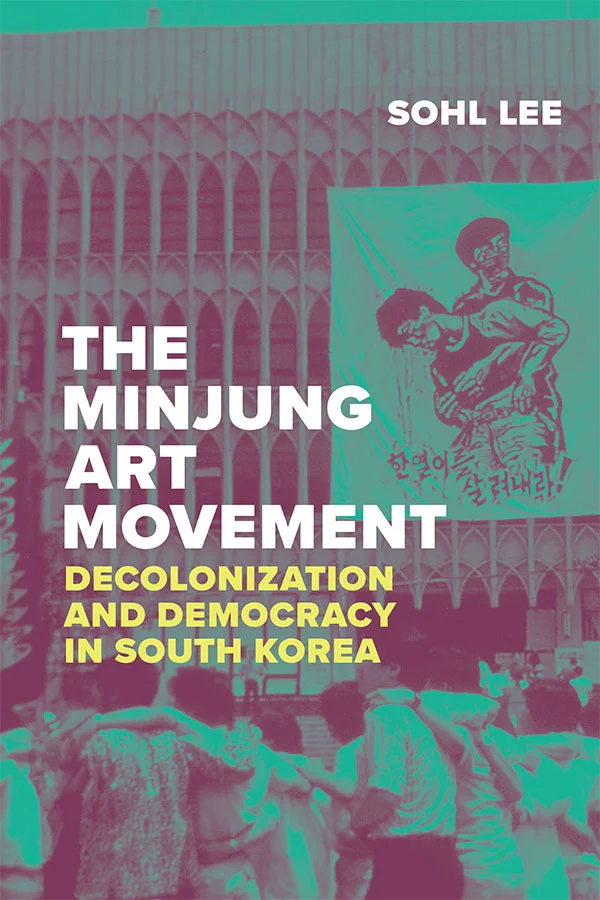
Book
Pages: 420
Illustrations: 136 color illustrations
Published: April 2026
Author: Sohl Lee
Subjects
Art and Visual Culture > Art History, Asian Studies > East Asia, Postcolonial and Colonial Studies
Art and Visual Culture > Art History, Asian Studies > East Asia, Postcolonial and Colonial Studies
Praise
Buy
Availability: In stock
Price: $40.00
This title will be released on April 14, 2026
Buy the e-book:
Information
Author/Editor Bios
Back to Top
Sohl Lee is Associate Professor of Art History at Stony Brook University.
Table Of Contents
Back to Top
List of Illustrations ix
Note on Transliteration and Translation xv
Preface and Acknowledgments xvii
Introduction 1
1. Decolonizing Modernism during the Cold War: Origins of the Minjung Art Movement 41
2. The Visual Cultural Turn for Decolonial Democracy: Forms and Methods of Reality and Utterance (1979–1984) 87
3. The Decolonial Place of Vernacular Folk Culture in Democracy: Turŏng, Collective Painting, and Sited Knowledge Production (1982–1985) 137
4. To Bring Back to Life: On the Metonym of Democracy (1987) 197
5. Exhibiting Minjung Art Abroad: Tokyo, New York, and Pyongyang in the Twilight of the Cold War (1986–1989) 237
Conclusion. Revolutionary Presents: Making Histories of Decolonial Democracy 283
Notes 307
Bibliography 363
Index
Note on Transliteration and Translation xv
Preface and Acknowledgments xvii
Introduction 1
1. Decolonizing Modernism during the Cold War: Origins of the Minjung Art Movement 41
2. The Visual Cultural Turn for Decolonial Democracy: Forms and Methods of Reality and Utterance (1979–1984) 87
3. The Decolonial Place of Vernacular Folk Culture in Democracy: Turŏng, Collective Painting, and Sited Knowledge Production (1982–1985) 137
4. To Bring Back to Life: On the Metonym of Democracy (1987) 197
5. Exhibiting Minjung Art Abroad: Tokyo, New York, and Pyongyang in the Twilight of the Cold War (1986–1989) 237
Conclusion. Revolutionary Presents: Making Histories of Decolonial Democracy 283
Notes 307
Bibliography 363
Index
Rights
Back to TopSales/Territorial Rights: World
Rights and licensingAdditional Information
Back to Top
Paper ISBN:
978-1-4780-3323-3 /
Hardcover ISBN:
978-1-4780-2980-9 /
eISBN:
978-1-4780-6199-1 /
DOI:
https://doi.org/10.1215/9781478061991
Publicity material