
The Nature of Space
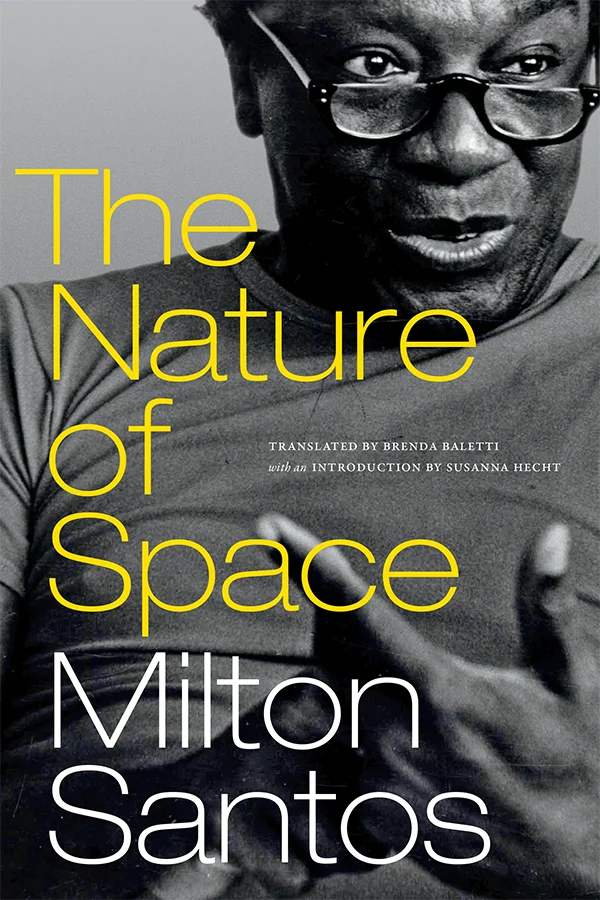
Book
Pages: 304
Illustrations: 1 illustration
Published: October 2021
Author: Milton Santos
Translator: Brenda Baletti
Introduction by: Hecht, Susanna
Contributor: Hecht, Susanna
Praise
Buy
Availability: In stock
Price: $28.95
This title will be released on October 06, 2021
Buy the e-book:
Information
Author/Editor Bios
Back to Top
Milton Santos (1926–2001) was Professor of Geography at the University of São Paulo and the author of many books, including The Shared Space: The Two Circuits of the Urban Economy in Underdeveloped Countries.
Brenda Baletti teaches in the Thompson Writing Program at Duke University.
Susanna Hecht is Professor of Urban Planning at the University of California, Los Angeles and Professor of International History at the Graduate Institute of International and Development Studies in Geneva.
Brenda Baletti teaches in the Thompson Writing Program at Duke University.
Susanna Hecht is Professor of Urban Planning at the University of California, Los Angeles and Professor of International History at the Graduate Institute of International and Development Studies in Geneva.
Table Of Contents
Back to Top
Introduction to the English-Language Edition: Milton Santos: Rebel of the Backlands, Insurgent Academic, Prescient Scholar / Susanna Hecht vii
Introduction 1
Part I. An Ontology of Space: Founding Ideas
1. Techniques, Time, and Geographic Space 13
2. Space: Systems of Objects, Systems of Action 34
3. Geographic Space, a Hybrid 53
Part II. The Production of Content-Forms
4. Space and the Notion of Totality 69
5. From the Diversification of Nature to the Territorial Division of Labor 81
6. Time (Events) and Space 91
Part III. For a Geography of the Present
7. The Current Technical System 111
8. Unicities: The Production of Planetary Intelligence 124
9. Objects and Actions Today: Norms and Territory 142
10. From the Natural Milieu to the Technical-Scientific-Informational Milieu 157
11. For a Geography of Networks 177
12. Horizontalities and Verticalities 192
13. Spaces of Rationality 198
Part IV. The Power of Place
14. Place and the Everyday 215
Universal Order, Local Order: Summary and Conclusion 229
Notes 237
References 241
Index 273
Introduction 1
Part I. An Ontology of Space: Founding Ideas
1. Techniques, Time, and Geographic Space 13
2. Space: Systems of Objects, Systems of Action 34
3. Geographic Space, a Hybrid 53
Part II. The Production of Content-Forms
4. Space and the Notion of Totality 69
5. From the Diversification of Nature to the Territorial Division of Labor 81
6. Time (Events) and Space 91
Part III. For a Geography of the Present
7. The Current Technical System 111
8. Unicities: The Production of Planetary Intelligence 124
9. Objects and Actions Today: Norms and Territory 142
10. From the Natural Milieu to the Technical-Scientific-Informational Milieu 157
11. For a Geography of Networks 177
12. Horizontalities and Verticalities 192
13. Spaces of Rationality 198
Part IV. The Power of Place
14. Place and the Everyday 215
Universal Order, Local Order: Summary and Conclusion 229
Notes 237
References 241
Index 273
Rights
Back to TopSales/Territorial Rights: World
Rights and licensingAdditional Information
Back to Top
Paper ISBN:
978-1-4780-1440-9 /
Hardcover ISBN:
978-1-4780-1348-8 /
eISBN:
978-1-4780-2170-4 /
DOI:
https://doi.org/10.1215/9781478021704
Publicity material