
Together, Somehow
Music, Affect, and Intimacy on the Dancefloor
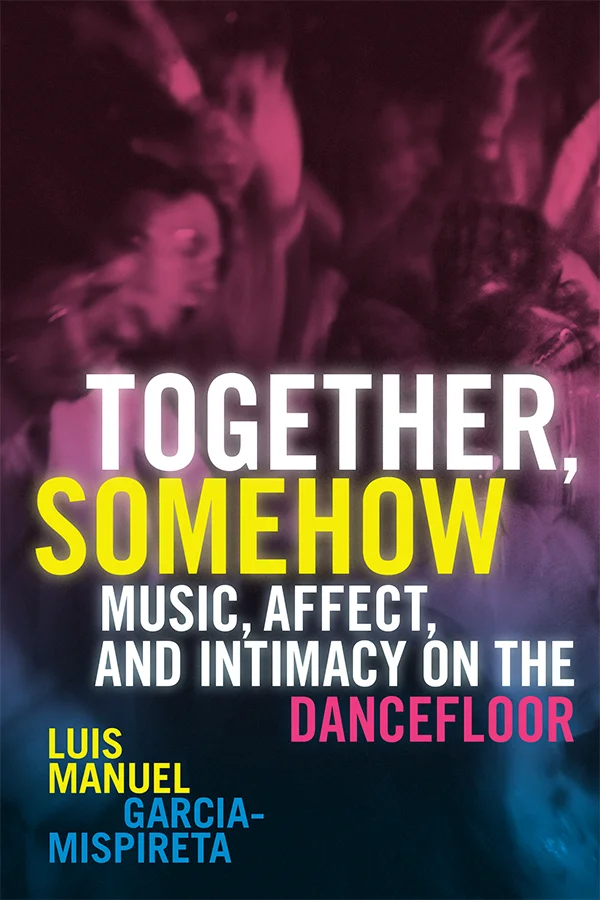
Book
Pages: 320
Illustrations: 20 illustrations
Published: August 2023
Author: Luis Manuel Garcia-Mispireta
Subjects
Cultural Studies > Affect Theory, Music > Ethnomusicology, Gender and Sexuality > LGBTQ Studies
Cultural Studies > Affect Theory, Music > Ethnomusicology, Gender and Sexuality > LGBTQ Studies
Praise
Buy
Availability: Loading...
Price: Loading...
This title will be released on August 08, 2023
Buy the e-book:
Information
Author/Editor Bios
Back to Top
Luis Manuel Garcia-Mispireta is Associate Professor in Ethnomusicology and Popular Music Studies at the University of Birmingham.
Table Of Contents
Back to Top
Preface ix
Introduction 1
1. Touch and Intimacy on the Dancefloor 37
2. Sonic Tactility 65
3. Liquidarity 91
4. Thickening Something 124
5. The Sweetness of Coming Undone 151
6. Bouncers, Door Policies, and Embedded Diversity 183
Epilogue 216
Notes 235
Bibliography 267
Index 291
Introduction 1
1. Touch and Intimacy on the Dancefloor 37
2. Sonic Tactility 65
3. Liquidarity 91
4. Thickening Something 124
5. The Sweetness of Coming Undone 151
6. Bouncers, Door Policies, and Embedded Diversity 183
Epilogue 216
Notes 235
Bibliography 267
Index 291
Rights
Back to TopSales/Territorial Rights: World
Rights and licensingAwards
Back to TopCo-Winner of the 2025 IASPM Book Prize, awarded by the International Association for the Study of Popular Music
Winner of the 2025 Woody Guthrie Award, presented by the International Association for the Study of Popular Music-US Branch
Winner of the 2024 Ruth Stone Prize, presented by the Society for Ethnomusicology
DUP First Book Fund Recipient
Additional Information
Back to Top
Related Links
- Author Website
- Read an interview with Luis Manuel Garcia-Mispireta in Music Journalism Insider
- Read an interview with Luis Manuel Garcia-Mispireta in Billboard
Publicity material